


A tail lift that suddenly stops working can quickly become a problem.
The vehicle might still be perfectly capable of getting to its destination, but if the tail lift is needed to load or unload, the vehicle may not be able to complete the job.
Sometimes the cause is a significant mechanical or hydraulic fault.
Other times, the problem can come down to a relatively small component.
A switch. A fuse. A damaged cable. A connection.
Knowing some of the common areas associated with tail lift problems can help you gather useful information before arranging further investigation or ordering replacement parts.
Here are some of the things worth checking.
1. Start With the Obvious
Before assuming there is a major problem, start with the basics.
Depending on the tail lift and installation, check for obvious issues such as:
- Is the tail lift switched on?
- Is there power to the system?
- Are there any visibly damaged controls?
- Are cables or connectors visibly damaged?
- Is anything obstructing the lift?
- Are there any obvious signs of hydraulic leakage?
- Has anything recently been damaged or replaced?
It sounds simple, but gathering this information can help narrow down where the problem may be.
If the fault requires further investigation, it also gives the technician a useful starting point.
2. Tail Lift Controls
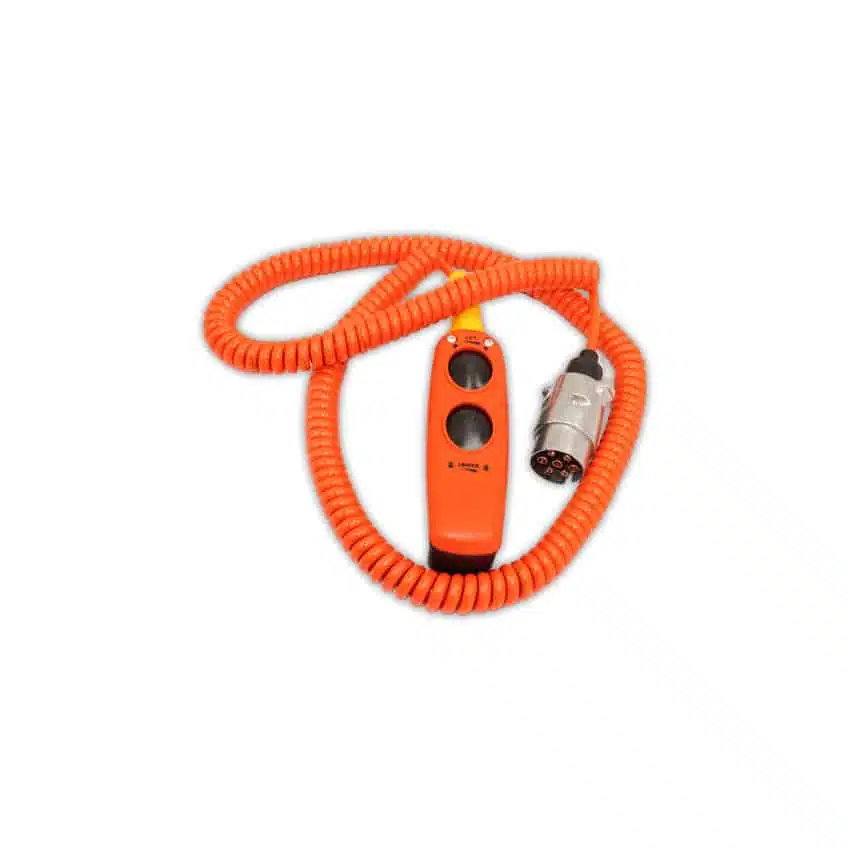
Tail lift controls have a hard life.
Wanderleads, push buttons, switches and control boxes are regularly handled and can be exposed to moisture, dirt, impact and general wear.
Look for obvious signs of damage such as:
- Cracked or broken buttons
- Damaged switch housings
- Split or damaged cables
- Loose connections
- Corroded connectors
- Intermittent operation
- Controls that have become difficult or unreliable to operate
If a tail lift responds to some commands but not others, the control system is one of the areas that may require investigation.
That doesn’t necessarily mean the control itself is responsible, so the fault should still be correctly diagnosed before replacement parts are ordered.
3. Electrical Connections, Fuses & Wiring
A tail lift relies on a number of electrical components working together.
Loose, damaged or corroded connections can cause intermittent or complete loss of operation.
Where appropriate, visually check for:
- Loose connections
- Damaged wiring
- Corrosion
- Damaged connectors
- Blown fuses
- Signs of overheating
- Water or moisture around electrical components
Electrical faults should be investigated by someone competent to do so.
But if you can identify obvious physical damage, take photographs before contacting your parts supplier.
Those pictures may be useful when identifying replacement components.
4. Hydraulic Leaks
If you can see hydraulic fluid where it shouldn’t be, something needs attention.
Leaks may occur around hoses, connections, cylinders or other parts of the hydraulic system.
Look for:
- Visible fluid
- Wet or oily components
- Damaged hoses
- Leaking connections
- Signs of fluid around hydraulic components
Don’t simply assume that replacing the first wet component you see will solve the problem.
The source of a leak should be properly identified and the system inspected before repairs are carried out.
5. Pins, Bushes & Rollers
Not every tail lift problem is electrical or hydraulic.
Tail lifts contain numerous moving components that are subject to wear during normal operation.
Pins, bushes and rollers should therefore be inspected as part of appropriate maintenance procedures.
Signs that something may require further attention can include:
- Excessive movement or play
- Visible wear
- Damaged bushes
- Worn rollers
- Unusual movement
- Components no longer sitting correctly
- Increased noise during operation
Catching wear early can make it easier to plan repairs rather than waiting until a component deteriorates further.

6. The Tail Lift Is Moving Slowly
A tail lift operating more slowly than normal can have several possible causes.
Rather than immediately ordering a replacement motor or hydraulic component, consider what else has changed.
- Is the problem constant or intermittent?
- Does it happen when raising, lowering or both?
- Has the lift gradually become slower?
- Are there any unusual noises?
- Are there any visible leaks?
- Has any work recently been carried out on the lift?
The answers can help whoever is diagnosing the fault understand what is happening.
7. The Tail Lift Won’t Raise or Lower
A lift that refuses to move doesn’t automatically tell you which component has failed.
The cause could potentially relate to the electrical, control, hydraulic or mechanical system.
This is why accurate fault diagnosis is so important.
Replacing parts based purely on a guess can create additional downtime – particularly if the replacement arrives and the original component wasn’t responsible for the fault.
Gather as much information as possible before ordering anything.
8. Identify the Tail Lift
If a replacement component is required, one of the most useful things you can provide is information about the tail lift itself.
Look for:
- Manufacturer
- Model Serial number
- Identification plate
- Part numbers
- Numbers or markings on the existing component
Manufacturers can use different components across different tail lift models, ages and specifications.
The fact that two parts look similar doesn’t necessarily mean they’re interchangeable.
9. Take Photos Before Removing Anything
We’ve said it before, and we’ll probably say it again:
Take photos.
Before removing the damaged component, photograph:
- The complete component
- Where it is fitted
- Connections
- Mounting points
- Labels
- Part numbers
- Electrical connections
- Hydraulic connections
- Any visible damage
If you later discover you don’t know which replacement you need, those photographs can be extremely useful.
Don’t Replace Parts Until You Know What’s Wrong
When a vehicle is waiting, there can be pressure to get a replacement part ordered as quickly as possible.
But speed only helps if you order the right component.
A tail lift problem should be appropriately diagnosed before parts are replaced, particularly where electrical, hydraulic or safety-related systems are involved.
Once you know what needs replacing, gathering the correct manufacturer information, part numbers, photographs and measurements can make sourcing the replacement much easier.
Need Help Identifying a Tail Lift Part?
Part-Serv supplies a wide range of tail lift components from leading manufacturers.
If you know the part number, send it over.
If you don’t, send our parts team photographs of the component, along with the tail lift manufacturer, model, measurements and any markings you can find.
We’ll help you identify what you need.
📧 Email: sales@part-serv.com
📞 Call: 01733 977584
Find the fault. Find the part. Get the lift moving again.

Write A Comment
You must be logged in to post a comment.