
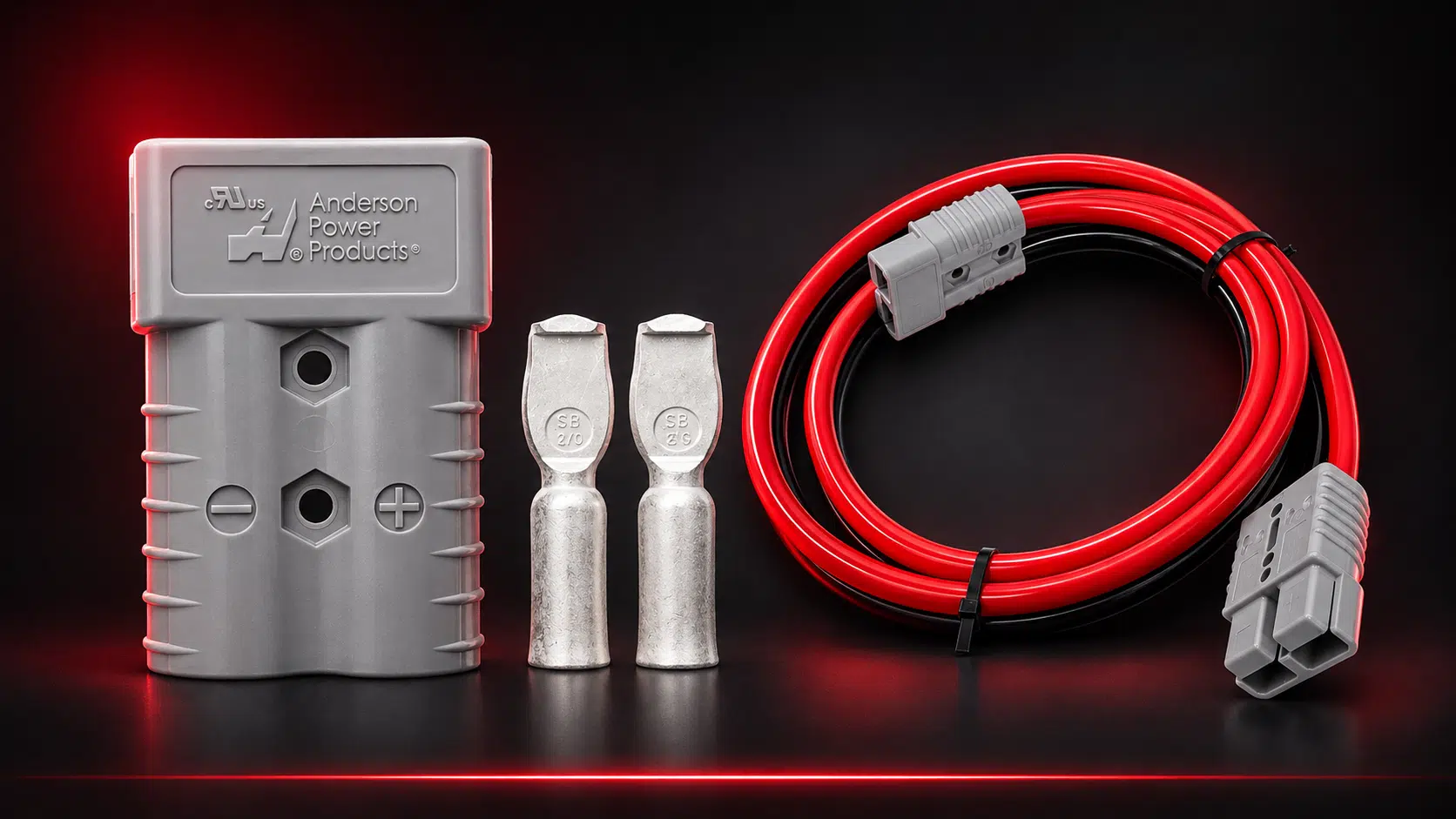

When it comes to commercial vehicle electrical systems, making the right connection is just as important as choosing the right component. Whether you’re connecting electrical equipment, replacing a damaged lead or sourcing a new connector, it’s important that the parts are suitable for the job. One type of connector you may come across is an Anderson connector. These connectors are commonly used in applications where a reliable, detachable electrical connection is needed, particularly for higher-current equipment. But what exactly are Anderson connectors, how do they work and what should you check when ordering replacements? Let’s take a closer look. 1. What Is an Anderson Connector? An Anderson connector is a type of electrical connector designed to provide a detachable connection between compatible electrical cables or equipment. Rather than having to permanently join two cables together, a suitable connector arrangement allows them to be connected and disconnected when required. Anderson connectors are often used in applications involving higher electrical currents. Depending on the equipment and installation, these can include commercial vehicle auxiliary electrical systems, battery connections and other powered equipment. The connectors typically use a housing containing electrical contacts, which connect when compatible connector halves are joined. Although the principle is straightforward, choosing the correct connector involves more than finding one that looks similar. 2. Where Are Anderson Connectors Used? Anderson connectors can be found in a variety of electrical applications. In commercial vehicle environments, they’re commonly associated with equipment that needs a suitable electrical power connection. Examples of applications may include: The exact application depends on the connector type, its electrical rating and the equipment it’s designed to work with. Not every Anderson connector is suitable for every electrical system, so it’s important to check the manufacturer’s specifications. 3. What Does the Amp Rating Mean? When looking at Anderson connectors, you’ll often see an amperage rating included in the product description. For example, Part-Serv lists a 175 Amp Anderson Connector Grey (LDEL116). But what does 175A actually mean? The A stands for amps, which is how electrical current is measured. A connector’s current rating tells you about the amount of current it is designed to carry under specified conditions. However, that doesn’t mean every installation using a 175A connector can automatically carry 175 amps. The complete connection needs to be considered, including the cable size, contacts, operating conditions and manufacturer’s specifications. Does the Voltage Matter Too? Yes. As we discussed in our guide to 12V and 24V commercial vehicle electrical components, voltage compatibility is important when choosing electrical parts. The connector must be rated for the voltage of the circuit in which it will be used. It’s also important to check the current rating and the suitability of the complete connection. A connector’s amp rating alone doesn’t tell you everything you need to know about its intended application. 4. Connector Housings, Pins and Leads: What’s the Difference? One thing that can make ordering Anderson connector components confusing is that not every product includes the same parts. You may need a connector housing, individual contacts or a complete cable assembly. Understanding the difference can help avoid ordering the wrong item. Anderson Connector Housings Part-Serv supplies the 175 Amp Anderson Connector Grey (LDEL116), a heavy-duty two-pole connector designed for suitable high-current electrical connections. It features a grey, keyed housing and is listed for applications including commercial vehicles, tail lifts and auxiliary electrical equipment. The product description also specifies silver-plated copper alloy contacts. When selecting a replacement, it’s important to check the connector series, current rating and compatibility with the matching connector. Part-Serv also lists compatible SB175 connector pins separately, so it’s worth confirming exactly which components are required for your installation. Connector Pins and Contacts The electrical contacts are the parts that provide the conductive connection when compatible connectors are joined. Part-Serv also lists SB175 Anderson Connector Pins (LDEL114), supplied individually. These are separate components rather than complete cable assemblies. When selecting replacement contacts, it’s important to check that they’re suitable for the connector housing and the cable being used. Contact type and cable compatibility matter, particularly where the connection is designed to carry higher currents. Complete Anderson Leads Sometimes you may need a complete lead rather than individual connector components. Part-Serv lists an Anderson to Anderson Lead, 2m Twinflex (LDEL138). This is a cable assembly with Anderson connectors at either end. When choosing a complete lead, check the length, connector configuration, cable specification and suitability for the equipment. A lead that looks similar may not necessarily be suitable for the same application. Mounting Components Some electrical connections require a fixed mounting arrangement rather than a loose cable-to-cable connection. Part-Serv supplies the Female Cowbell Connector – Mounting Half (LDEL118), designed for use in compatible heavy-duty electrical connection systems. These types of fittings can be used in commercial vehicle, tail lift and battery charging applications. When replacing a mounting connector, it’s important to check the existing fitting, mounting arrangement and compatibility with the corresponding connector. 5. Are All Anderson Connectors Interchangeable? No, and this is one of the most important things to remember. Anderson connectors are available in different designs, sizes and electrical ratings. Even when two connectors look similar, they may not be designed to work together. Differences can include: Does Connector Colour Matter? It can. With certain Anderson connector ranges, housing colour forms part of the connector’s mechanical compatibility arrangement. This means that two connectors with similar-looking housings may not necessarily mate correctly if they’re different colours or configurations. However, colour alone shouldn’t be used to identify a connector’s complete electrical specification. For example, Part-Serv’s LDEL116 is listed as a grey 175A connector. When sourcing a replacement, it’s important to confirm the connector series and specifications rather than relying on colour alone. 6. What Should You Check Before Ordering? If you’re replacing an Anderson connector or associated lead, there are a few useful details to check first. Connector type: What series or design is fitted to the existing equipment? Current rating: Is the connector suitable for the electrical load? Voltage

-
All Categories
- Bulk Buy
- Clearance Sale
- Commercial Body Parts
- Engineers Equipment
- Load Restraint
- Shutter Door Parts
- Tail Lift Parts
- Wheel Safety